June 29, 2026
Amazon’s Retail Crown: What Sellers Must Do Now That Amazon Leads U.S. GMV
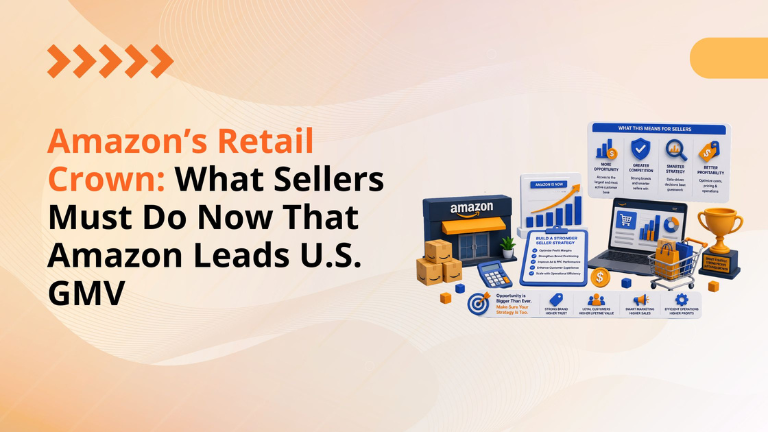
Amazon has officially reached a major retail milestone by overtaking Walmart as the largest U.S. retailer by gross merchandise value. For Amazon sellers and brand owners, this is more than an industry headline. It confirms that Amazon is now one of the most important retail environments where shoppers discover, compare, and buy products.
The shift matters because GMV includes the value of products sold through Amazon’s marketplace, not just Amazon’s own retail revenue. A large share of that marketplace activity comes from third-party sellers, which means independent brands and marketplace operators are a major part of Amazon’s retail dominance.
For sellers, this creates both opportunity and pressure. The platform is bigger, but so are the consequences of poor margin control, weak listings, rising advertising costs, inventory issues, and policy changes. When Amazon updates fees, search rules, fulfillment requirements, or seller policies, those changes can directly affect profitability across one of the largest retail surfaces in the country.
We will explain why Amazon’s GMV milestone matters, what it means for third-party sellers and brands, and how businesses should review their Amazon strategy, SKU-level profitability, PPC efficiency, and marketplace performance to compete more confidently.
Amazon becoming the largest U.S. retailer by gross merchandise value is more than a retail industry milestone. It changes how brands should think about marketplace growth, profitability, and operational control.
For years, many brands treated Amazon as one part of their ecommerce strategy. Walmart, retail stores, brand websites, and other marketplaces sat beside it in the planning process.
That view is now too small.
When Amazon leads U.S. retail by GMV, it becomes the first place many sellers should look to understand customer demand, pricing pressure, advertising efficiency, and product-level profitability.
For third-party sellers, this is both validation and pressure. The opportunity is bigger than ever, but so is the cost of poor margin control.
GMV measures the value of products sold through the platform, including third-party marketplace sales.
That distinction matters because Amazon’s strength is not only built on products it sells directly. It is also built on the millions of independent sellers, brands, and marketplace operators using Amazon as their primary retail engine.
For sellers, this means Amazon’s importance goes beyond one account dashboard. It is now a major indicator of where shoppers search, compare, and buy.
A structured review through Amazon Store Management can help sellers understand whether their Amazon account is ready for this higher level of competition.
As Amazon becomes more dominant, every marketplace change carries more weight.
A referral fee adjustment, FBA cost increase, return policy change, storage surcharge, or advertising shift can affect profitability across multiple SKUs.
That is why sellers need to move beyond top-line sales reporting.
A product may look strong on revenue but weak on contribution margin once fees, PPC, refunds, promotions, storage, and reimbursements are included.
This is where Amazon brands need clean SKU-level visibility.
First, make Amazon your primary retail KPI dashboard.
Track sales, sessions, conversion rate, ranking, inventory, Buy Box, returns, PPC, and profit every week.
Second, pressure-test your top ASINs.
Model what happens if FBA fees increase, referral fees move up, returns rise, or PPC costs become more expensive.
Third, connect advertising with real margin.
Strong Amazon Advertising PPC Services should not only drive traffic. It should protect profitability and scale the right products.
Fourth, strengthen listing conversion.
Better Amazon Content Optimization and Amazon Image Optimization can help convert traffic more efficiently before sellers spend more on ads.
Fifth, review organic visibility.
A stronger Amazon SEO strategy helps sellers reduce overdependence on paid traffic as competition grows.
Big Internet Ecommerce helps Amazon sellers turn marketplace data into better growth decisions.
Our team reviews SKU profitability, PPC performance, listing quality, inventory pressure, catalog structure, and account-level growth risks.
The goal is simple: help sellers compete profitably on the retail platform that now matters more than ever.
Quick FAQs
It means the total value of products sold through Amazon has surpassed Walmart’s U.S. retail GMV, including marketplace sales from third-party sellers.
Because Amazon policy, fee, advertising, and search changes now affect one of the largest retail surfaces in the country.
Sellers should review SKU-level profitability, PPC efficiency, listing conversion, and margin sensitivity across their top ASINs.
Need help understanding whether your Amazon business is truly profitable?
Schedule a strategy call with our team.
Follow Big Internet Ecommerce (BIE) on Instagram & LinkedIn to stay updated with the latest trends in Amazon selling.
Fill out the form and our experts will get back
to you within 24 hours.
.webp)
.webp)
.webp)
We respect your privacy. Your information is safe with us.