June 26, 2026
Amazon’s Brand-First Shift: How Brand Elevation Could Change Catalog Control
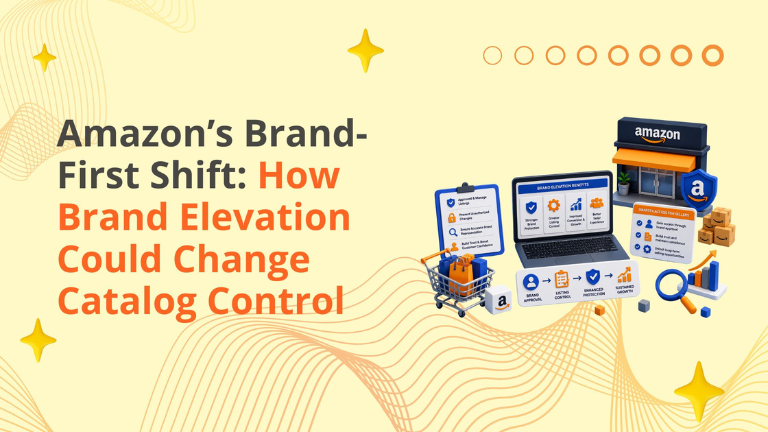
Amazon is moving toward a more controlled and brand-first marketplace, and the Amazon Brand Elevation program is a clear sign of that shift. For years, many brands have struggled with unauthorized sellers, duplicate listings, inaccurate product information, and inconsistent customer experiences on their product detail pages.
With Brand Elevation, Amazon is giving participating brands greater influence over how their products are represented across the marketplace. This means brand-submitted content may receive higher priority, while unauthorized sellers may face more restrictions when creating new branded catalog entries.
For brand owners, this creates an opportunity to protect product accuracy, improve shopper trust, and strengthen catalog control. For third-party sellers and wholesalers, it introduces a new level of responsibility around authorization, documentation, and listing compliance.
We will explain what Amazon Brand Elevation means, how it may impact brand owners and third-party sellers, and what businesses should do now to protect their Amazon presence before catalog control becomes a bigger competitive advantage.
Amazon has always been a massive opportunity for both brand owners and third-party sellers.
But as the marketplace has grown, so have catalog problems. Many brands have faced inaccurate listings, duplicate ASINs, unauthorized bundles, incorrect product details, and sellers changing branded product information without direct brand approval.
The Amazon Brand Elevation program signals a stronger push toward brand-controlled catalog management.
For brand owners, this can mean more control over how products appear to shoppers. For third-party sellers, it can mean new limitations when creating branded product listings without authorization.
Amazon shoppers depend on product detail pages to make fast purchase decisions.
If the listing title is wrong, the image is outdated, the product description is inaccurate, or multiple duplicate listings exist, customers may lose trust and choose a competitor.
That is why listing control matters.
Amazon Brand Elevation gives participating brands greater influence over the product information shown on branded detail pages. This can help reduce confusion and improve consistency across the marketplace.
A structured review through Amazon Store Management can help brands identify where catalog control issues are hurting performance.
For brands, this update can create a stronger path to protect product pages.
Brand-submitted information may receive higher priority when Amazon decides which title, description, images, or product details appear to shoppers.
That can help brands reduce inaccurate content, protect product positioning, and improve the customer experience.
However, this only works if the brand has its own catalog in order.
Brands should review titles, bullets, product attributes, images, A+ Content, variation structure, and backend data. Strong Amazon Content Optimization can help ensure product pages are accurate, searchable, and conversion-focused.
Third-party sellers and wholesalers may face more restrictions when creating new listings for branded products.
If a seller is not authorized by the brand or manufacturer, creating new branded catalog entries may become harder.
This is especially important for sellers who rely on wholesale, retail arbitrage, or resale models. Authorization, documentation, and supplier transparency may become more important than ever.
Sellers should review their catalog, supplier relationships, invoices, brand permissions, and listing practices before restrictions create account or inventory problems.
Brand control is not only about protection.
It is also about performance.
When a brand controls product information properly, listings become clearer, images become more consistent, and shoppers can compare products more easily.
Better visuals through Amazon Image Optimization can help brands improve trust and reduce confusion on product pages.
If the catalog is clean, advertising also performs better. Amazon Advertising PPC Services can support growth more effectively when traffic lands on accurate, optimized listings.
First, confirm Brand Registry status and permissions.
Second, audit all branded ASINs for incorrect content, duplicate listings, unauthorized variations, and outdated images.
Third, review reseller relationships and decide who should be authorized to create or manage branded listings.
Fourth, clean up catalog data before scaling advertising.
Fifth, monitor listing changes regularly so unauthorized edits or catalog issues do not damage conversion.
Big Internet Ecommerce helps Amazon brands protect, optimize, and grow their marketplace presence.
Our team reviews Brand Registry readiness, listing accuracy, catalog structure, content quality, product images, PPC performance, and unauthorized listing risks.
The goal is simple: help brands take control of their Amazon presence before catalog issues turn into lost sales.
Amazon Brand Elevation is a marketplace update that gives participating brands more influence over branded product listing information and may restrict unauthorized sellers from creating branded catalog entries.
Brand owners can gain stronger control over product information, reduce catalog confusion, and protect shopper trust.
Third-party sellers may need proper authorization before creating certain branded product listings.
Brands should review Brand Registry access, product titles, images, variation structure, A+ Content, duplicate listings, and authorized reseller permissions.
Need help protecting your Amazon brand presence?
Schedule a strategy call with our team.
Follow Big Internet Ecommerce (BIE) on Instagram & LinkedIn to stay updated with the latest trends in Amazon selling.
Fill out the form and our experts will get back
to you within 24 hours.
.webp)
.webp)
.webp)
We respect your privacy. Your information is safe with us.