August 31, 2026
Amazon Meltable FBA Inventory Reopens: What Sellers Need to Prepare Before Shipments Resume
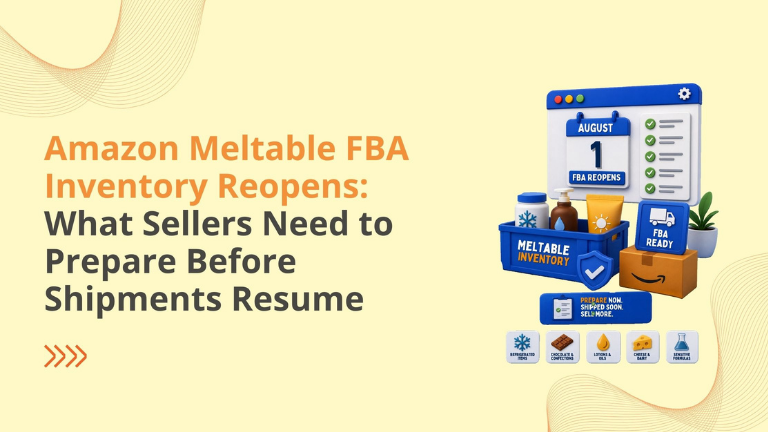
For Amazon sellers with heat-sensitive products, the FBA calendar matters as much as the advertising calendar.
If you sell chocolate, gummies, protein bars, coated candy, caramel, jelly-based products, or select wax-based items, your ability to use FBA can change by season.
Now Amazon is reopening FBA shipments for meltable inventory in stages starting August 31, 2026.
That gives sellers a chance to prepare inventory before customer orders resume. But it also creates a tight planning window. If you wait too long, you may face shipment delays, receiving delays, inventory gaps, missed PPC timing, or lost seasonal momentum.
This update should not be treated as a simple shipping notice.
It should be treated as a Q4 readiness signal.
The sellers who prepare early can have inventory ready, listings cleaned up, PPC campaigns aligned, and demand capture planned before competitors fully react.
Amazon sellers can start sending meltable inventory to FBA again beginning August 31, 2026, based on product type.
Gummies, coated gummies, pectin gummies, protein bars, cookies, and coated candy can be sent starting August 31, 2026. These products are expected to become available for customer orders on September 14, 2026.
Chocolate, chocolate-coated nuts, chocolate-coated fruit, caramel, and gelatin gummies can be sent starting September 21, 2026. These products are expected to become available for customer orders on October 5, 2026.
Sellers should create shipments through Send to Amazon and review the meltable ASIN list in Seller Central before sending inventory.
Amazon meltable FBA inventory includes heat-sensitive products that may melt when exposed to high temperatures for extended periods.
Amazon defines meltable inventory as products that can melt when exposed to temperatures of 155 degrees Fahrenheit for extended periods. This includes chocolate, gummies, and select jelly- and wax-based products. Amazon’s policy is designed to protect product quality during shipping, storage, and delivery.
Common meltable products can include:
Not every product in these categories is automatically treated the same way.
Sellers should check the Meltable ASINs list in Seller Central because Amazon updates the list periodically.
Amazon restricts meltable FBA inventory because product quality can be affected by heat during storage, shipping, and delivery.
A product that arrives melted can create:
Amazon states that meltable product offers that fail to maintain quality standards can be suppressed.
This is important for sellers because a product quality issue does not stay limited to fulfillment.
It can affect conversion, ranking, reputation, and advertising performance.
The timing is important.
Meltable products often have strong sales potential during fall, holiday, gifting, Halloween, Thanksgiving, and Q4 shopping periods.
But sellers cannot wait until demand arrives to prepare inventory.
FBA receiving can take time.
Campaigns need setup time.
Listings may need updates.
A+ Content may need refreshes.
Catalog issues may need cases.
Inventory forecasting may need adjustment.
If a seller waits until the product becomes available for customer orders, they may already be behind.
The better approach is to prepare before the shipment window opens.
Before sending meltable inventory to Amazon, sellers should review the account carefully.
Start with ASIN classification.
Check whether each product is listed as meltable in Seller Central.
Then confirm which reopening date applies to the product type.
Next, review inventory and shipping plans.
Sellers should check:
This helps prevent a common mistake: sending inventory without aligning the listing, ads, and demand plan.
Sometimes a seller may believe Amazon incorrectly classified an ASIN as meltable.
Amazon allows sellers to request a review of meltable ASIN classification.
According to Amazon’s policy, sellers can submit documentation to Selling Partner Support for consideration. The documentation should be written on manufacturer letterhead and include the specific ASIN, confirmation that the ASIN can be stored at a maximum temperature of 155 degrees Fahrenheit for an extended period, the temperature where the product loses integrity, and a point of contact for verification.
Even if documentation is submitted, Amazon can still suppress offers if customers complain that the product arrived melted.
That means sellers should not rely only on classification review.
They should also review product packaging, fulfillment method, temperature exposure, and customer experience.
During restricted periods, Amazon may not accept meltable products into FBA.
However, sellers may still be able to sell meltable products through seller-fulfillment when they can manage the temperature-sensitive shipping process properly.
Amazon’s policy notes that sellers can continue selling through seller-fulfillment during the restricted period and should use proper cold-pack capabilities or appropriate carriers for temperature-sensitive goods.
This matters because sellers should not build their entire meltable product strategy around FBA alone.
A strong plan may include:
For brands selling through Amazon and their own website, this can also support continuity when FBA restrictions are active.
Inventory and PPC are connected.
If FBA inventory is not ready, PPC cannot work properly.
If campaigns restart too early, sellers may spend before the product is fully available.
If campaigns restart too late, sellers may miss demand.
If a listing has poor images or weak A+ Content, new traffic may not convert.
If pricing is not competitive, video and PPC will not fix the issue.
If inventory runs out during peak demand, ranking momentum can drop.
For meltable products, sellers should plan PPC around:
This is especially important for chocolate, gummies, protein bars, snacks, supplements, and giftable consumables.
Before customer orders resume, sellers should make sure the listing is ready to convert.
Review:
A strong product listing should answer the shopper’s basic concerns before they click away.
For meltable products, shoppers may care about:
If the listing does not address those points clearly, FBA availability alone may not create strong sales.
The biggest risk is sending either too little or too much inventory.
Too little inventory can lead to stockouts just as demand increases.
Too much inventory can create storage pressure, aging inventory, or removal risk later.
Sellers should forecast based on:
For products with strict expiration dates, inventory planning should be even more careful.
The goal is to have enough inventory to capture demand without creating future removal or disposal pressure.
Sellers should mark these dates now.
August 31, 2026: First meltable group can start being sent to FBA. This includes gummies, coated and pectin gummies, protein bars, cookies, and coated candy.
September 14, 2026: First meltable group becomes available for customer orders.
September 21, 2026: Chocolate, chocolate-coated nuts, chocolate-coated fruit, caramel, and gelatin gummies can start being sent to FBA.
October 5, 2026: Second meltable group becomes available for customer orders.
April 20, 2026 policy reference: Amazon’s published meltable inventory policy states that meltable inventory stored or arriving during the restricted warm-weather period may be marked unfulfillable or disposed of for a fee. Sellers should review the current policy in Seller Central before making shipment decisions.
Many meltable inventory problems happen because sellers wait too long.
Avoid these mistakes:
A meltable FBA reopening is useful only when the account is ready to use it.
We help Amazon sellers and D2C brands grow through Amazon PPC management, Amazon SEO, listing optimization, A+ Content, catalog health, Store Management, compliance support, and marketplace growth strategy.
We help sellers connect the important parts of Amazon growth: traffic, conversion, inventory, catalog health, and operational readiness.
This matters because meltable inventory is not just a fulfillment issue.
It affects:
A strong ad campaign cannot help if the product is unavailable.
A strong listing cannot convert if the product is suppressed.
A strong Q4 plan can fail if inventory reaches FBA too late.
We helps sellers review Amazon account readiness before these problems affect growth.
If you sell meltable products, take action before the FBA window opens.
Review your Meltable ASINs list.
Separate products by allowed send date.
Check current inventory levels.
Confirm supplier timelines.
Review packaging and heat sensitivity.
Prepare shipments in Send to Amazon.
Update listings before customer orders resume.
Plan PPC campaigns around availability dates.
Monitor receiving status.
Prepare seller-fulfilled backup where needed.
Track customer feedback after products go live.
Review account health and suppression risks.
This gives your brand a stronger chance to enter the season prepared instead of reacting late.
Amazon meltable FBA inventory includes heat-sensitive products that can melt when exposed to high temperatures for extended periods, such as chocolate, gummies, coated candy, and select jelly- or wax-based products.
Sellers can start sending certain meltable products to FBA on August 31, 2026. Chocolate and some other products can start being sent on September 21, 2026.
Gummies, coated gummies, pectin gummies, protein bars, cookies, and coated candy can be sent to FBA starting August 31, 2026.
The first product group is expected to be available for customer orders on September 14, 2026. Chocolate, chocolate-coated products, caramel, and gelatin gummies are expected to be available on October 5, 2026.
Amazon’s policy says meltable inventory stored or arriving during restricted periods may be marked unfulfillable or disposed of for a fee.
Yes. Sellers can request a review by submitting manufacturer documentation showing that the ASIN can withstand Amazon’s required temperature conditions.
Yes. Sellers may continue selling meltable products through seller-fulfillment when they can manage temperature-sensitive shipping properly.
We can help sellers review FBA readiness, PPC timing, listing optimization, catalog health, inventory planning, and seasonal Amazon growth strategy.
Amazon reopening meltable FBA inventory is good news for sellers in heat-sensitive categories.
But the sellers who benefit most will not be the ones who simply send inventory.
They will be the ones who prepare the full growth system.
Inventory must be ready.
Listings must be optimized.
PPC must be timed correctly.
Packaging must protect product quality.
Customer experience must be monitored.
Catalog health must be clean.
If your brand sells meltable products, now is the time to prepare for the reopening window and Q4 demand.
We can help review your Amazon account, PPC structure, listing readiness, catalog health, and seasonal growth plan.
Schedule a strategy call with our team.
Follow Big Internet Ecommerce (BIE) on Instagram & LinkedIn to stay updated with the latest trends in Amazon selling.
Fill out the form and our experts will get back
to you within 24 hours.
.webp)
.webp)
.webp)
We respect your privacy. Your information is safe with us.