August 10, 2026
Amazon Labor Day Sale Strategy: How Sellers Can Boost Sales and Clear Inventory Before Q4
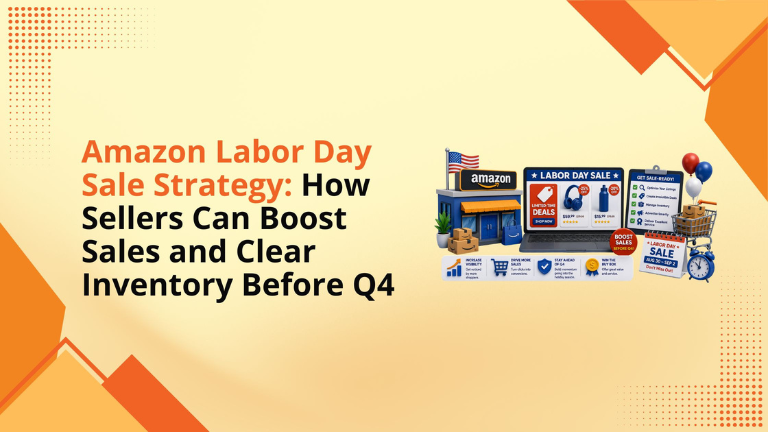
For Amazon sellers, Labor Day is more than a seasonal promotion.
It is one of the final opportunities to generate sales, move aging inventory, and clean up FBA stock before Q4 peak events begin.
Amazon’s Labor Day Sale runs from August 28 to September 7. During this period, shoppers are actively looking for deals across high-demand categories such as Electronics, Home & Kitchen, Fashion, Sports & Outdoors, Beauty & Personal Care, Kitchen, and Appliances.
For sellers, the opportunity is clear: prepare early, choose the right promotions, support deals with advertising, and improve inventory health before holiday demand increases.
Many sellers focus heavily on Prime Day, Black Friday, Cyber Monday, and holiday sales.
Labor Day is sometimes treated as a smaller event, but that can be a mistake.
This sales window can help sellers reduce excess inventory before storage pressure increases. It can also create sales momentum for ASINs that need stronger velocity before Q4.
A well-planned Labor Day strategy can help sellers:
The goal is not simply to discount products. The goal is to make smarter inventory and sales decisions before the busiest quarter of the year.
Amazon Outlet gives sellers a way to promote overstocked and clearance products to deal-focused shoppers.
For products that have been sitting in fulfillment centers or exceeding forecasted demand, Outlet can help increase visibility and sell-through.
This can be especially useful before Q4 because aged inventory can limit storage flexibility when sellers need room for holiday replenishment.
Amazon Outlet can help sellers:
Sellers should submit Outlet deals by August 14 to allow time for review before the Labor Day Sale begins.
Sellers can review eligible Outlet recommendations in the FBA Inventory section of Seller Central.
If an ASIN is recommended, sellers can submit an Outlet deal with a price that meets Amazon’s maximum deal price requirement. Once approved, the deal may be featured on Amazon Outlet for a fixed promotional period.
To participate, sellers generally need a Professional selling plan and a strong customer rating.
Eligible ASINs typically need to meet requirements such as:
Not every eligible product will receive an Outlet recommendation. Amazon regularly reviews eligibility, so sellers should monitor recommendations frequently.
Labor Day promotions should be selected based on the goal for each ASIN.
Different promotional tools serve different purposes.
Amazon sellers may consider:
The best promotion is not always the biggest discount.
Sellers should review margin, inventory level, ASIN demand, competitive price, and ad support before choosing a promotion.
Prime Exclusive Deals allow sellers to offer special pricing to Prime members.
These deals can receive Prime deal badging and may gain visibility through Prime-focused merchandising.
This can be useful when sellers want to target loyal Amazon customers without making the same discounted price available to every shopper.
Prime Exclusive Deals can be especially helpful when:
Sellers cannot manually force Prime Exclusive eligibility. They need to check the deals recommendations dashboard to see which ASINs qualify.
Coupons remain one of the most flexible promotional tools for Amazon sellers.
They can help attract attention on search results and product pages, especially when shoppers are comparing similar items.
Sellers can create percentage-off or money-off coupons, depending on the offer strategy.
However, sellers should be careful with coupon overlap. Coupons may combine with other promotions such as sale prices, Lightning Deals, Business pricing, or Outlet deals.
Before launching a coupon, sellers should check:
A coupon may not show properly if the offer is not buyable or does not become the Featured Offer.
A common seller mistake is launching ad support only when the event starts.
By that point, campaigns may not have enough time to build momentum.
Sellers should begin advertising early so deal ASINs can gain visibility before the Labor Day Sale window opens.
A Labor Day ad strategy may include:
The goal is to support the deal before, during, and after the event.
Inventory health is one of the most important reasons sellers should take Labor Day seriously.
Slow-moving FBA inventory can create storage pressure heading into Q4. If sellers do not move aged stock early, they may have less flexibility for peak-season replenishment.
Moving inventory before Q4 can help sellers:
Labor Day can be used as a controlled inventory cleanup period before the holiday rush begins.
Amazon Fulfillment Reports can help sellers understand inventory movement, customer orders, returns, adjustments, removals, and stock reconciliation.
For FBA sellers, these reports are important when deciding which ASINs should be promoted, replenished, removed, or reviewed.
Useful reports may include:
Sellers should use these reports to understand what is actually happening with inventory before making promotion decisions.
Automated pricing rules can interfere with Outlet deals.
If pricing rules prevent an ASIN’s price from dropping to the approved Outlet deal price, Amazon may cancel the deal.
Before submitting Outlet deals, sellers should review automated pricing rules and adjust them where needed.
This is especially important because deal prices must stay within Amazon’s approved maximum deal price requirement.
If the selling price changes or rises above the allowed deal price, the promotion may be removed without advance notice.
Sellers should avoid treating Labor Day as a last-minute discount exercise.
Common mistakes include:
A strong sales event strategy requires planning across pricing, promotions, inventory, advertising, and listing quality.
We help Amazon sellers prepare for marketplace events with a complete growth approach.
Labor Day is not just about running discounts. It is about deciding which products deserve visibility, which ASINs need inventory cleanup, which listings need improvement, and where ad budget can create the best return.
We support Amazon sellers with:
Our team helps sellers connect promotional activity with long-term Amazon growth.
Amazon’s Labor Day Sale runs from August 28 to September 7.
Sellers should submit eligible Labor Day deals by August 14.
Amazon Outlet helps sellers promote overstocked or clearance products and can support sell-through for aged or excess FBA inventory.
Amazon does not charge an additional Outlet deal fee, but standard referral and fulfillment fees still apply.
Yes. Coupons may combine with other discounts such as Outlet deals, sale prices, Lightning Deals, or other promotions.
Starting campaigns early can help deal ASINs gain visibility and momentum before the main event window begins.
The Amazon Labor Day Sale runs from August 28 to September 7, but sellers need to prepare before the event begins.
If you have aged inventory, excess stock, weak deal visibility, or ASINs that need stronger sales momentum before Q4, this is the time to act.
Review your inventory. Submit eligible deals. Plan your coupons. Start advertising early. Check your reports. Make sure your listings are ready to convert.
Schedule a strategy call with our team.
Follow Big Internet Ecommerce (BIE) on Instagram & LinkedIn to stay updated with the latest trends in Amazon selling.
Fill out the form and our experts will get back
to you within 24 hours.
.webp)
.webp)
.webp)
We respect your privacy. Your information is safe with us.