July 2, 2026
Amazon Business Delivery Rules Are Changing: How FBM Sellers Can Protect B2B Sales
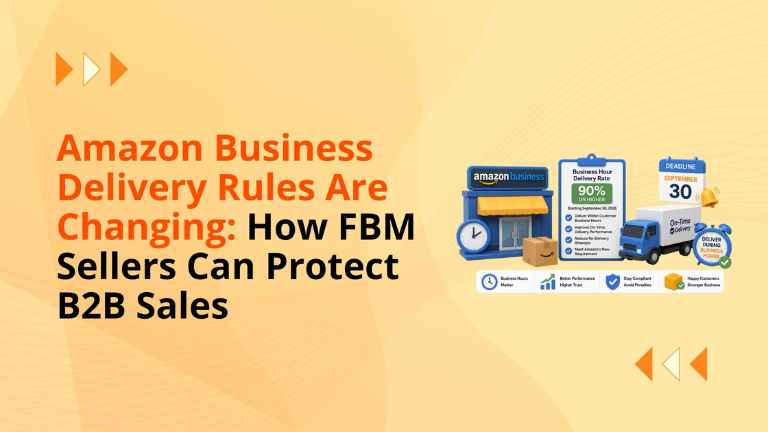
Amazon Business customers do not just care that a package arrives. They care when it arrives.
For seller-fulfilled brands, delivery performance is becoming more than an operational metric. It is now directly tied to Amazon Business visibility and customer trust.
Starting September 30, 2026, Amazon will require seller-fulfilled shipments to Amazon Business customers in the US store to maintain a Business Hour Delivery Rate of 90% or higher. This means packages must be delivered on the first attempt and within the customer’s operating hours.
This update matters because Amazon Business customers often rely on timely deliveries to offices, schools, clinics, warehouses, and other commercial locations. A missed delivery window can lead to reattempts, delayed receiving, lost packages, and a weaker buying experience.
For FBM sellers, the new requirement is a clear reminder that shipping settings, carrier selection, handling times, and delivery promises must be managed carefully. Sellers who fail to meet the standard may risk losing seller-fulfilled offer visibility to Amazon Business customers.
A shipment delivered after office hours, on a closed day, or during an unavailable window can create failed delivery attempts, lost packages, re-delivery costs, and poor customer experience. That is why Amazon is turning Business Hour Delivery Rate from an informational metric into a required performance standard.
Starting September 30, 2026, seller-fulfilled shipments to Amazon Business customers in the US store must maintain a Business Hour Delivery Rate of 90% or higher.
For FBM sellers, this update creates a clear message: delivery promises must match real business operating hours. If they do not, seller-fulfilled offers could lose visibility to Amazon Business customers.
Business Hour Delivery Rate measures the percentage of seller-fulfilled Amazon Business shipments delivered on the first attempt and within the customer’s business hours.
The metric applies to Amazon Business shipments going to commercial addresses.
It is measured over a rolling 14-day period and refreshed daily. Amazon uses promised delivery dates from a defined reporting window, which means sellers need to monitor performance consistently instead of waiting until the end of the month.
A full account review through Amazon Store Management can help sellers understand whether fulfillment settings, shipping promises, and account health metrics are aligned.
This requirement can directly affect sellers who depend on FBM or seller-fulfilled offers.
If your Business Hour Delivery Rate is below 90% on September 30, Amazon may notify you and provide improvement recommendations. If the rate does not improve by October 30, your seller-fulfilled offers may be deactivated for Amazon Business customers.
FBA and retail offer eligibility are not affected, but FBM sellers serving B2B buyers need to take this seriously.
Amazon Business can be a valuable sales channel, especially for products sold to offices, schools, clinics, industrial buyers, facilities, restaurants, and organizations. Losing access to those customers can hurt revenue and repeat business.
Many sellers may assume that if a package is delivered on time, the order is safe.
That is not always true.
For Business Hour Delivery Rate, the first delivery attempt must happen within the customer’s operating hours. A carrier attempting delivery at night, over the weekend, or during a closed business window may cause the shipment to fail the metric.
This means sellers need to evaluate carriers and shipping methods based on business-hour performance, not only cost or standard delivery speed.
First, open Account Health and review your Business Hour Delivery Rate.
Download the BHDR report and check which orders failed. Review the carrier name, ship method, first attempt delivery time, customer business hours, and failure reason.
Second, identify weak carrier patterns.
If certain carriers or services repeatedly miss business-hour delivery, move Amazon Business orders to more reliable commercial delivery options.
Third, update handling and transit settings.
Accurate handling time and delivery promises reduce the risk of missed windows. Sellers should not overpromise delivery speed if the carrier cannot meet business-hour expectations.
Fourth, use Amazon-supported shipping tools where possible.
Amazon recommends reliable carriers, Automated Handling Time, Shipping Settings Automation, and Amazon Buy Shipping. Shipments fulfilled using all three tools are positioned to meet the Business Hour Delivery Rate requirement.
Fifth, connect delivery performance with advertising and sales planning.
Driving more demand through Amazon Advertising PPC Services only works if fulfillment can support the orders being generated.
Amazon Business buyers often purchase differently from regular retail customers.
They may reorder supplies, buy in larger quantities, and expect reliable delivery to a workplace. If delivery timing fails, the seller may lose not only one order but also future B2B purchase trust.
For brands selling across Amazon, Shopify, Walmart, or other channels, a stronger Multi-Channel Integration strategy can help align inventory, shipping rules, and fulfillment visibility.
Big Internet Ecommerce helps Amazon sellers prepare for account health and fulfillment performance requirements.
Our team can review seller-fulfilled performance, Amazon Business eligibility risk, shipping templates, handling time, Buy Shipping usage, carrier performance, and SKU-level fulfillment strategy.
We help sellers protect sales eligibility while building a stronger Amazon growth system.
Business Hour Delivery Rate measures the percentage of seller-fulfilled Amazon Business shipments delivered on the first attempt within the customer’s operating hours.
The requirement starts September 30, 2026, with sellers expected to maintain a 90% or higher Business Hour Delivery Rate.
Amazon may notify sellers and provide recommendations. If performance does not improve by October 30, seller-fulfilled offers may be deactivated for Amazon Business customers.
No. Amazon states that FBA and retail offer eligibility are not impacted by this seller-fulfilled shipment requirement.
Need help preparing your Amazon account for the new Business Hour Delivery Rate requirement?
Schedule a strategy call with our team.
Follow Big Internet Ecommerce (BIE) on Instagram & LinkedIn to stay updated with the latest trends in Amazon selling.
Fill out the form and our experts will get back
to you within 24 hours.
.webp)
.webp)
.webp)
We respect your privacy. Your information is safe with us.